If you come to The Abbey of the Genesee seeking to worship God you have come to the right place. There are services around the clock starting with Vigils at 2:25am. Lauds is at 6am, Sext at 11:15am, Vespers at 4:30pm, and Compline at 6:40pm. Surely if you want to worship God then one of these times will fit your busy schedule. These are the services that are open to the public at this monastery in Piffard, New York, and Father Jerome told me that the monks have a couple of other worship times as well.
And if you like your services to be short, you have also come to the right place. Most are less than a half hour except for those which are combined with a Mass (with Holy Communion).
And if you are tired of that so-called contemporary praise music with those electric guitars and much too happy singers, you’ll find none of that at the Abbey.
And those long and boring sermons (or even worse – those in which the preacher tells you all those personal stories) won’t be found at the Abbey of the Genesee.
But if you long for predictability and order and formality and simplicity, you should be thrilled. And if walking into a quiet church in which no one speaks to each other or whispers in the pews and people stand when they are supposed to and bow when they are supposed to and don’t leave until they are supposed to and pray the Lord’s Prayer every single time, then you need to come here. God is respected and revered here.
The major portion of each worship experience is the chanting (substitute the word “singing” if “chanting” scares you) of the Psalms – usually three per service. You can chant along with the monks – the words are contained in a large hymnbook (a beautiful book all by itself) that lays in front of the choir stalls you can sit in. No notes, just the words, you’ll get the hang of it. Just don’t be in a hurry. I believe that the monks chant every psalm every week. And the order is set – no last minute bulletin changes for these guys. Worship bulletin – who needs them? No announcements either. The monks also sing a song; we all sing praises to the Trinity a few times and bow as we do it; and a passage of scripture is always read. Bells toll to begin worship and to end it, and there are plenty of moments for silence.
You wouldn’t use the words “praise” or “contemporary” or “traditional” to describe these round-the-clock 24/7/365 services. They are not part of a category that most of us are familiar with. They are not the latest thing to come to a local church near you. You might even find them a bit strange.
But the robe-wearing monks have been worshipping God this way for a long time. The basic outline for what they do is contained in “The Rule of St. Benedict” written about 1500 years ago. Talk about that “Old Time Religion.”
As a local church pastor who has to come up with something new (at least sermon wise) every week, the simplicity and predictability and order of it all speaks to be on a deep level. I feel relieved just walking in the door. And our music director might feel the same way. Every when I am not at a monastery, I will often think about monks chanting the psalms – there must be some monks somewhere in the world lifting up those psalms every minute of every day, every day of the week, every week of the year. Even if I am not in the room with them, I know they are there. Even if the language they speak is not English, I can hear them. And I am grateful for their constant and abiding and faithful witness.
This type of worship is not for everybody, and I need other worship styles as well. I enjoy a high energy worship experience. But I also need these simple monastic services – these low tech, counter cultural, slow moving opportunities in which it is clear that we are not trying to impress God or anyone else with our performances or with our fervor. We are content, instead, to sing simply the words from the ancient songbook of our faith (the Psalms). We enter the worship space quietly and leave it in the same way. It may look like we haven’t been touched or changed by it all, but we have.
I am hungry for God, starving for God, and my soul is fed through monastic worship. It isn’t the only meal I need, but I require it as part of my spiritual diet. Are you starving for God? Do you go from church to church or experience to experience just hoping for a scrap of spiritual bread? Something that will sustain you? Where and how is your soul fed?
Jim
Sunday, June 26, 2011

Friday, June 24, 2011
Abbey Normal: Part One (The Silent Treatment)
You always notice it at mealtime. There are no casual conversations. No jokes. No comments about the weather or the latest sports scores. There are no angry words spoken either. No passionate theological debates though I am sure that there are significant differences among us. No word comes from anyone’s mouth except for a few announcements made before the meal by our host Kathe followed by a prayer. There is just silence from the dozen or so of us. Silence except for the clinking of silverware against the plates and bowls. Silence except for some quiet background music that comes from a small CD player.
This is not the silence that sometimes accompanies a couple who have been fighting with one another before they enter a restaurant; a bitterness, a resentment, an “I better not say anything because I can’t trust myself” silence as they sit across from one another and act out the ritual of a loving couple out on a date. Or the silence of a grieving family who are eating because they must but whose thoughts, minds, and hearts are somewhere else.
No, this silence is not filled with negative emotions. This is not the silence that leads someone to want to shout: “What’s happening here?” This silence is different. This is a quiet silence not a noisy silence. This is a silence that has not been imposed on us but freely chosen by us.
You see we are all housemates at least for a few days at the Bethlehem Retreat House which is located on the grounds of the Abbey of Genesee, a Trappist Monastery in Piffard, New York. A sign in the wall says, “Silence and Solitude,” and that is what all of us have come seeking. I don’t know anything about those others who share mealtime with me. I don’t know why they have come, what they are seeking, what they are experiencing, I don’t even know if they speak my language. One young man left after only one day – maybe that had been his plan all along – but the size of his suitcase suggested a longer visit had been planned. Now and again, I would like to ask those around me who they are and why they have come, but I know that their story is none of my business. It is between them and God. I hope they find what they seek.
I have been here for about a day and a half. It is the fourth time that I have come to a monastery for a silent retreat. Genesee is new to me, but the silence is not. The first time I went on a weeklong silent retreat, I almost left after a few days. I started making up excuses to myself for why I had to go home. I seemed to be losing myself without my spoken words, and I was afraid of what would be left of me when all the words were gone. Is that what a stroke victim feels like whose words will not come back to them?
I know that my loss of words is only temporary and self-imposed. They will return to me as a gift when I leave at the end of the week. One thing of which I am sure – the world is missing nothing when my mouth is shut. Many of the words I speak are inane rather than profound, sarcastic rather than soothing, banal rather than extraordinary. I have often regretted something that I have said; I have rarely regretted keeping quiet.
One of the reasons that I am keeping silence this week is that I have heard enough of my own words; I have had my fill of my own brand of wisdom. I am seeking something rarer and deeper than the voice of Jim Bane; I am seeking the voice of God. I yearn to hear God’s perspective. By being quiet, I hope to remove some barriers and give God a larger space in my life to move around and talk with me.
People expect me to be witty and always have something clever to say. And I usually give them what they want. But even in those times, I know that the value of my verbal contributions are limited. Most of what I say is forgotten almost before it leaves my mouth. And it should be.
My temporary housemates have no clue how clever and witty I really am. They expect nothing of me at mealtimes except to keep my mouth shut. I am giving them what they want. It is a great relief for all of us. I am freed of the burden to speak and they are freed of the burden of listening to me. It is an arrangement that benefits everyone. As our information sheet says, “If you are breaking the silence, you are taking it away from others.” I don’t want to take away anything from anyone while I am here.
St. Benedict (who 1500 years ago wrote the guidelines for monks to follow) said that “so important is silence that permission to speak should seldom be granted even to mature disciples, no matter how good or holy or constructive is their talk.” I often wonder if I am a mature believer (I doubt it) so I will keep silence this week. I will not speak so I can be in a better position to listen.
I have always liked the passage from James that says: “Be quick to listen, slow to speak, slow to anger.” I have always liked it, yet so rarely followed it. What a great formula for building community.
What about you? You probably have a number of folks in mind who you wish would choose silence and be unable to speak to you for a few days. But is it time for you to give your mouth a rest, to lay down the burden of speaking, and to free others of the load of listening to you? Is it time for you to take a silent retreat?
Jim Bane
This is not the silence that sometimes accompanies a couple who have been fighting with one another before they enter a restaurant; a bitterness, a resentment, an “I better not say anything because I can’t trust myself” silence as they sit across from one another and act out the ritual of a loving couple out on a date. Or the silence of a grieving family who are eating because they must but whose thoughts, minds, and hearts are somewhere else.
No, this silence is not filled with negative emotions. This is not the silence that leads someone to want to shout: “What’s happening here?” This silence is different. This is a quiet silence not a noisy silence. This is a silence that has not been imposed on us but freely chosen by us.
You see we are all housemates at least for a few days at the Bethlehem Retreat House which is located on the grounds of the Abbey of Genesee, a Trappist Monastery in Piffard, New York. A sign in the wall says, “Silence and Solitude,” and that is what all of us have come seeking. I don’t know anything about those others who share mealtime with me. I don’t know why they have come, what they are seeking, what they are experiencing, I don’t even know if they speak my language. One young man left after only one day – maybe that had been his plan all along – but the size of his suitcase suggested a longer visit had been planned. Now and again, I would like to ask those around me who they are and why they have come, but I know that their story is none of my business. It is between them and God. I hope they find what they seek.
I have been here for about a day and a half. It is the fourth time that I have come to a monastery for a silent retreat. Genesee is new to me, but the silence is not. The first time I went on a weeklong silent retreat, I almost left after a few days. I started making up excuses to myself for why I had to go home. I seemed to be losing myself without my spoken words, and I was afraid of what would be left of me when all the words were gone. Is that what a stroke victim feels like whose words will not come back to them?
I know that my loss of words is only temporary and self-imposed. They will return to me as a gift when I leave at the end of the week. One thing of which I am sure – the world is missing nothing when my mouth is shut. Many of the words I speak are inane rather than profound, sarcastic rather than soothing, banal rather than extraordinary. I have often regretted something that I have said; I have rarely regretted keeping quiet.
One of the reasons that I am keeping silence this week is that I have heard enough of my own words; I have had my fill of my own brand of wisdom. I am seeking something rarer and deeper than the voice of Jim Bane; I am seeking the voice of God. I yearn to hear God’s perspective. By being quiet, I hope to remove some barriers and give God a larger space in my life to move around and talk with me.
People expect me to be witty and always have something clever to say. And I usually give them what they want. But even in those times, I know that the value of my verbal contributions are limited. Most of what I say is forgotten almost before it leaves my mouth. And it should be.
My temporary housemates have no clue how clever and witty I really am. They expect nothing of me at mealtimes except to keep my mouth shut. I am giving them what they want. It is a great relief for all of us. I am freed of the burden to speak and they are freed of the burden of listening to me. It is an arrangement that benefits everyone. As our information sheet says, “If you are breaking the silence, you are taking it away from others.” I don’t want to take away anything from anyone while I am here.
St. Benedict (who 1500 years ago wrote the guidelines for monks to follow) said that “so important is silence that permission to speak should seldom be granted even to mature disciples, no matter how good or holy or constructive is their talk.” I often wonder if I am a mature believer (I doubt it) so I will keep silence this week. I will not speak so I can be in a better position to listen.
I have always liked the passage from James that says: “Be quick to listen, slow to speak, slow to anger.” I have always liked it, yet so rarely followed it. What a great formula for building community.
What about you? You probably have a number of folks in mind who you wish would choose silence and be unable to speak to you for a few days. But is it time for you to give your mouth a rest, to lay down the burden of speaking, and to free others of the load of listening to you? Is it time for you to take a silent retreat?
Jim Bane
Tuesday, April 26, 2011
Let Pain Be Your Guide
“Let pain be your guide.” Who first said that anyway? Was it Jesus or the Buddha or Mohammed? Or was it from a Bruce Lee movie? That expression might reveal a deep insight to some, yet I could also understand how it might sound like shallow psycho-babble to others.
I have been turning this expression around in my head for about a week since it was directed to me by an intern in orthopedic medicine. I don’t know if that intern had memorized this expression from a classroom lecture entitled: “The kinds of things to say to people recovering from surgery” or if he has experienced them as words to live by in his own life.
Of course, I immediately thought of the many coaches I have had over the years who loved to say: “No pain, no gain.” I think this was meant to be either motivation for us to do stupid things to prove our dedication to the sport or justification for their cruel drills such as the one called “Blood Board” that we participated in during middle school football. The especially witty coaches would say, “Hey Bane, no pain, no gain.” They were so proud of themselves and acted like they had discovered rhyming. I played along and pretended that I had never heard such a clever use of language (except in grade school by eight year olds).
Which expression: “Let pain be your guide” or “No pain, no gain” has contained greater wisdom for you in your own life? What kind of pain have you found to be inevitable and potentially helpful, and what kind has been overwhelming and debilitating? Do you approach pain or avoid it?
I don’t seek pain for myself nor do I want to inflict it on others, but I know especially in my role as a church leader that pain in one form or another is unavoidable if the church is to become or to stay healthy. I know that my actions have brought pain to others, but in most circumstances I believe that living through the pain and emerging from the pain has brought the church to a better place. Even with that knowledge, I have been saddened when my actions have caused others to be deeply hurt. May I never say: “This is going to hurt me more than it hurts you.” That sounds a lot like: “Your pain is not as great as my pain.” That judgment is not mine to make.
I appreciate the expression “pain management” because it contains the truth that we can’t eliminate pain from our lives, but with the appropriate resources we can get out of bed in the morning and keep moving most of the day. But there are days for all of us, aren’t there, when the pain is just too great – either physically or emotionally or spiritually – and the best response we can come up with is to stay in bed and hope the next day brings some relief?
Doctors like to ask you to evaluate your pain on a scale of 1-10 with 10 being the worst pain imaginable. My mother had severe arthritis in her back and her legs and had to go to the pain management center every so many months to be examined. She needed to prove to them that she was still hurting so that they would continue to give her the medications she needed to function. I was with her once when she was asked to state her pain level. “Ten,” she said without hesitation, and I am sure that she was telling the truth. And I am also sure that the meds never completely took her pain away, but at least they eased her suffering somewhat.
While I was the recovery room following my leg surgery two months ago, one of the nurses told me that she was going to give me some morphine before the other anesthesia completely wore off. Within seconds, I had an incredible sense of peace and well-being. I can honestly say that I would have liked to have remained in that state for a long time. But after a few hours, they packed me up and pushed me out the door in a wheelchair. And they didn’t give me any of my new friend morphine to take with me. Pain was in my future, but so was healing. I couldn’t have the healing I wanted without the pain that I didn’t want. Pain indeed would be one of my guides.
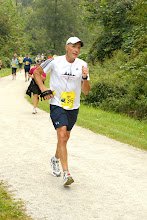
I ran a 5K race a few days ago. I was slow before the tumor was removed from my leg and am even slower now. I still ran faster than I should have run. But it wasn’t about the time, it was about the participation. It was about running outside on a spring morning in Northeast Ohio with 100 other people – some of whom, I am sure, have had significantly greater challenges than me to overcome. I was incredibly thankful just to be running.
I don’t think I got any of those endorphins, but running was still a lot better than morphine.
May your pain lead you into a deeper and better place with yourself, with others, and with God.
I have been turning this expression around in my head for about a week since it was directed to me by an intern in orthopedic medicine. I don’t know if that intern had memorized this expression from a classroom lecture entitled: “The kinds of things to say to people recovering from surgery” or if he has experienced them as words to live by in his own life.
Of course, I immediately thought of the many coaches I have had over the years who loved to say: “No pain, no gain.” I think this was meant to be either motivation for us to do stupid things to prove our dedication to the sport or justification for their cruel drills such as the one called “Blood Board” that we participated in during middle school football. The especially witty coaches would say, “Hey Bane, no pain, no gain.” They were so proud of themselves and acted like they had discovered rhyming. I played along and pretended that I had never heard such a clever use of language (except in grade school by eight year olds).
Which expression: “Let pain be your guide” or “No pain, no gain” has contained greater wisdom for you in your own life? What kind of pain have you found to be inevitable and potentially helpful, and what kind has been overwhelming and debilitating? Do you approach pain or avoid it?
I don’t seek pain for myself nor do I want to inflict it on others, but I know especially in my role as a church leader that pain in one form or another is unavoidable if the church is to become or to stay healthy. I know that my actions have brought pain to others, but in most circumstances I believe that living through the pain and emerging from the pain has brought the church to a better place. Even with that knowledge, I have been saddened when my actions have caused others to be deeply hurt. May I never say: “This is going to hurt me more than it hurts you.” That sounds a lot like: “Your pain is not as great as my pain.” That judgment is not mine to make.
I appreciate the expression “pain management” because it contains the truth that we can’t eliminate pain from our lives, but with the appropriate resources we can get out of bed in the morning and keep moving most of the day. But there are days for all of us, aren’t there, when the pain is just too great – either physically or emotionally or spiritually – and the best response we can come up with is to stay in bed and hope the next day brings some relief?
Doctors like to ask you to evaluate your pain on a scale of 1-10 with 10 being the worst pain imaginable. My mother had severe arthritis in her back and her legs and had to go to the pain management center every so many months to be examined. She needed to prove to them that she was still hurting so that they would continue to give her the medications she needed to function. I was with her once when she was asked to state her pain level. “Ten,” she said without hesitation, and I am sure that she was telling the truth. And I am also sure that the meds never completely took her pain away, but at least they eased her suffering somewhat.
While I was the recovery room following my leg surgery two months ago, one of the nurses told me that she was going to give me some morphine before the other anesthesia completely wore off. Within seconds, I had an incredible sense of peace and well-being. I can honestly say that I would have liked to have remained in that state for a long time. But after a few hours, they packed me up and pushed me out the door in a wheelchair. And they didn’t give me any of my new friend morphine to take with me. Pain was in my future, but so was healing. I couldn’t have the healing I wanted without the pain that I didn’t want. Pain indeed would be one of my guides.
I ran a 5K race a few days ago. I was slow before the tumor was removed from my leg and am even slower now. I still ran faster than I should have run. But it wasn’t about the time, it was about the participation. It was about running outside on a spring morning in Northeast Ohio with 100 other people – some of whom, I am sure, have had significantly greater challenges than me to overcome. I was incredibly thankful just to be running.
I don’t think I got any of those endorphins, but running was still a lot better than morphine.
May your pain lead you into a deeper and better place with yourself, with others, and with God.
Sunday, March 6, 2011
The First Time I Was Told I Might Have Cancer
The first time I was told I might have cancer was in 1973. I was a junior in high school, and had seen a specialist because of severe pain in a part of my body I really wanted to keep. The specialist said that it looked like I had a tumor, it might be cancerous, but if he had to remove my body part that I could still have “a normal life.” I don’t recall any sympathy or empathy as he delivered those lines to me. It was more of “this is the way it is, kid, deal with it.”
A few days later when I woke up after surgery, I looked at the bandages and wondered what was there and what was missing. It was a while before I heard the good news that I did not have cancer and still had all my body parts. I remember feeling relieved and grateful, but it didn’t become a turning point in my life after which I dedicated myself to smelling the roses everyday and all that kind of stuff. It had all happened pretty fast, and I didn’t have a lot of time before the surgery to ponder what cancer might have meant to me. Although my physical activity was restricted, within a few days I was back at school, going to class, doing homework, laughing with my friends, and doing all the kinds of things a 16 year old does.
The second time I was told I might have cancer was just over two weeks ago. I had been under the care of physical therapists and a sports medicine specialist for a pain in my left leg that just wouldn’t go away. The original diagnosis was a hamstring injured while running which turned out to be an accurate yet incomplete assessment. I was under treatment for most of the fall and into the winter before the specialist decided to order an MRI.
Two days after the MRI, I met with the specialist and a resident who was learning the finer points of doctoring. I wondered later what he learned that day. The specialist came in and announced, “I am afraid we’ve got some bad news, Mr. Bane. The MRI revealed that you have a large growth in your leg, and it might be cancer. It will have to be removed.” Now, I was already sitting down, so he didn’t have to say, “Mr. Bane, please sit down.” I didn’t fall over because I don’t think I absorbed what he said right away. My initial verbal response was: “Well, does this mean I’ll be in the wheelchair division (of races)?” No one laughed.
He took me out to a computer, brought up the MRI, and showed an image of a large mass that didn’t belong in my leg. He had a name for it that sounded less threatening than tumor, but within minutes I couldn’t remember what it was. He said he was turning me over to his partner whose specialty was surgery and oncology. Who wants to have an appointment with any specialist with the word “oncology” on his card, anyway? I was given a date for a week later and was out the door and into my car and driving home.
Not counting the time I spent waiting to be seen, the entire visit was about 15 minutes in length. Other than the fact that I got to see an MRI, the interaction was roughly equivalent to the “you might have cancer” conversation I had had 38 years before.
The events might have been similar, but my response to them was not because in the 38 years separating those “you might have cancer” conversations I have actually grown quite fond of living. As a 16 year old I didn’t want to lose that body part; as a 54 year old I didn’t want to lose my life just yet. I have learned in those 38 just what a loss it would be to die, for you see, I am not a Buddhist or a Hindu. I don’t believe in reincarnation. I am a Christian and I believe that this life is the only one I am going to have.
Now, you might be thinking about me: “What a dunce. Doesn’t he know that even if he has cancer, it doesn’t necessarily lead to death? And why did he immediately assume he has cancer anyway?” –OR- “What a shallow, faithless person (especially for an ordained minister). Doesn’t he know that everyone who lives will die someday? And doesn’t he realize what a blessed and long life he has lived compared to most of the world’s people? And shouldn’t he be looking forward to a future in heaven – the sooner, the better?”
Intellectually, I did know that a cancer diagnosis does not have to be fatal. I have known many people who have been successfully treated for cancer (even if they did lose a body part or two along the way). And I also knew that I have led a truly wonderful life with so many, many blessings. God has been very good to me. And after presiding at so many funerals, I think I have faced the fact that someday my body (like everyone else’s) will give up the ghost.
But my clinical intellect was no match for my emotions. Cancer felt like death to me, and I wasn’t prepared to die yet. My father died a week shy of his 48th birthday, and I remember the relief I had when I turned 48. I felt like I had passed an important threshold leading to a new phase of my life. Was this new phase to be so very short?
I have always kept a journal, but the day after the second time I was told that I might have cancer I stopped writing in my old notebook and started a fresh one. At the top I wrote: “The Rest of My Life Journal.” I feel that this second time for me is a turning point in my life regardless of how much longer my life might be. I don’t know what kind of turning point it will be yet, but I sense that it is pivotal.
Since I started that new journal, I have had surgery and a growth larger than my fist was removed from my left leg. On the back of that leg, I have an incision about seven inches long which is held together by staples. It looks like something stitched together by Victor Frankenstein, and once it heals it should provide a disturbing enough scar to scare the average child. If only short shorts were in fashion again.
Some people get a tattoo as a visible reminder of a significant event in their lives. I have thought about getting a tattoo before, but I won’t need one now. That scar will be my tattoo.
I still don’t know if I have cancer or not. The initial biopsy of a small part of the tumor was negative, and I should learn this week about the biopsy on the whole mass. I feel like I am running to escape the forest that is filled with monsters, I can see the clearing ahead, I glimpse the sunlight, I am almost there, but something might just get my ankle and pull me back in. I am not out of the woods yet.
Regardless of what I hear this week, I hope that I respond with a sense of gratitude and thankfulness because 38 years between my first and my second cancer scare is longer than what many people live. I haven’t just had a “normal life,” but a life richly blessed. I have no complaints to lift up to God or to anyone else. I’ll seek to be happy with whatever years I might have left. In the meantime, I try to live out these words of Paul in Romans 12:12: “Rejoice in hope, be patient in suffering, persevere in prayer.”
A few days later when I woke up after surgery, I looked at the bandages and wondered what was there and what was missing. It was a while before I heard the good news that I did not have cancer and still had all my body parts. I remember feeling relieved and grateful, but it didn’t become a turning point in my life after which I dedicated myself to smelling the roses everyday and all that kind of stuff. It had all happened pretty fast, and I didn’t have a lot of time before the surgery to ponder what cancer might have meant to me. Although my physical activity was restricted, within a few days I was back at school, going to class, doing homework, laughing with my friends, and doing all the kinds of things a 16 year old does.
The second time I was told I might have cancer was just over two weeks ago. I had been under the care of physical therapists and a sports medicine specialist for a pain in my left leg that just wouldn’t go away. The original diagnosis was a hamstring injured while running which turned out to be an accurate yet incomplete assessment. I was under treatment for most of the fall and into the winter before the specialist decided to order an MRI.
Two days after the MRI, I met with the specialist and a resident who was learning the finer points of doctoring. I wondered later what he learned that day. The specialist came in and announced, “I am afraid we’ve got some bad news, Mr. Bane. The MRI revealed that you have a large growth in your leg, and it might be cancer. It will have to be removed.” Now, I was already sitting down, so he didn’t have to say, “Mr. Bane, please sit down.” I didn’t fall over because I don’t think I absorbed what he said right away. My initial verbal response was: “Well, does this mean I’ll be in the wheelchair division (of races)?” No one laughed.
He took me out to a computer, brought up the MRI, and showed an image of a large mass that didn’t belong in my leg. He had a name for it that sounded less threatening than tumor, but within minutes I couldn’t remember what it was. He said he was turning me over to his partner whose specialty was surgery and oncology. Who wants to have an appointment with any specialist with the word “oncology” on his card, anyway? I was given a date for a week later and was out the door and into my car and driving home.
Not counting the time I spent waiting to be seen, the entire visit was about 15 minutes in length. Other than the fact that I got to see an MRI, the interaction was roughly equivalent to the “you might have cancer” conversation I had had 38 years before.
The events might have been similar, but my response to them was not because in the 38 years separating those “you might have cancer” conversations I have actually grown quite fond of living. As a 16 year old I didn’t want to lose that body part; as a 54 year old I didn’t want to lose my life just yet. I have learned in those 38 just what a loss it would be to die, for you see, I am not a Buddhist or a Hindu. I don’t believe in reincarnation. I am a Christian and I believe that this life is the only one I am going to have.
Now, you might be thinking about me: “What a dunce. Doesn’t he know that even if he has cancer, it doesn’t necessarily lead to death? And why did he immediately assume he has cancer anyway?” –OR- “What a shallow, faithless person (especially for an ordained minister). Doesn’t he know that everyone who lives will die someday? And doesn’t he realize what a blessed and long life he has lived compared to most of the world’s people? And shouldn’t he be looking forward to a future in heaven – the sooner, the better?”
Intellectually, I did know that a cancer diagnosis does not have to be fatal. I have known many people who have been successfully treated for cancer (even if they did lose a body part or two along the way). And I also knew that I have led a truly wonderful life with so many, many blessings. God has been very good to me. And after presiding at so many funerals, I think I have faced the fact that someday my body (like everyone else’s) will give up the ghost.
But my clinical intellect was no match for my emotions. Cancer felt like death to me, and I wasn’t prepared to die yet. My father died a week shy of his 48th birthday, and I remember the relief I had when I turned 48. I felt like I had passed an important threshold leading to a new phase of my life. Was this new phase to be so very short?
I have always kept a journal, but the day after the second time I was told that I might have cancer I stopped writing in my old notebook and started a fresh one. At the top I wrote: “The Rest of My Life Journal.” I feel that this second time for me is a turning point in my life regardless of how much longer my life might be. I don’t know what kind of turning point it will be yet, but I sense that it is pivotal.
Since I started that new journal, I have had surgery and a growth larger than my fist was removed from my left leg. On the back of that leg, I have an incision about seven inches long which is held together by staples. It looks like something stitched together by Victor Frankenstein, and once it heals it should provide a disturbing enough scar to scare the average child. If only short shorts were in fashion again.
Some people get a tattoo as a visible reminder of a significant event in their lives. I have thought about getting a tattoo before, but I won’t need one now. That scar will be my tattoo.
I still don’t know if I have cancer or not. The initial biopsy of a small part of the tumor was negative, and I should learn this week about the biopsy on the whole mass. I feel like I am running to escape the forest that is filled with monsters, I can see the clearing ahead, I glimpse the sunlight, I am almost there, but something might just get my ankle and pull me back in. I am not out of the woods yet.
Regardless of what I hear this week, I hope that I respond with a sense of gratitude and thankfulness because 38 years between my first and my second cancer scare is longer than what many people live. I haven’t just had a “normal life,” but a life richly blessed. I have no complaints to lift up to God or to anyone else. I’ll seek to be happy with whatever years I might have left. In the meantime, I try to live out these words of Paul in Romans 12:12: “Rejoice in hope, be patient in suffering, persevere in prayer.”
Wednesday, February 2, 2011
I would give my right arm for...
Nine out of ten. That’s how many of the 2010 Oscar best picture nominees that I have seen so far. This tells you what I do with some of my free time. I call it “sermon research.” Just saw “127 Hours” a couple of days ago, and like some of the other nominees it is not a movie for everyone. I first heard the story of Aron Ralston (on whom the film is based) about three years ago, and I have shared it as a sermon example in our church as well as a lesson for churches I have coached. In my preaching, I almost always prefer true stories (no matter how many loose ends) to “minister stories” or fables such as the person throwing starfish back into the sea or the “I am a battleship/ I am a lighthouse” tale. Don’t even bring up Footprints. I figure that if I can’t find a true story to illustrate a passage of scripture, then I need to preach on a different text.
As you likely know, Ralston became famous for his courage in overcoming an incredible challenge. While hiking alone in Utah’s Blue John Cavern in 2003, Ralston became trapped when a boulder came loose and pinned his right arm to the cavern wall. During his 127 hours of captivity, Ralston explored a number of options before ultimately deciding to cut off his arm so that he could escape.
Ralston did not want to cut his own arm off but any less drastic measure would have meant his death. Before managing to free himself, he had even scrawled his name on the wall along with the date and RIP. He knew the consequences of staying trapped.
When I have talked about Aron Ralston, I have invited people to think about whatever it is that might be trapping them and holding them down. With some local churches, the large cost of maintaining an aging building is the boulder that is killing them and preventing them from realizing new life. Individuals (and organizations) are often held back by unhealthy relationships, patterns of behavior, addictions, or debts.
In many cases, the boulder (like Ralston’s right arm) was once healthy and life-giving. Those churches needed those big buildings back in their boom times. Those old patterns of behavior were once new and fresh and effective. But over time, healthy can become deadly. The rock on which people once built their lives now crushes them; the building which enabled ministry now prevents it. I have suggested to churches that in order to have a fresh start that they might have to cut off their right arm – that building which they love so much – because to stay in it will lead to the grave. The same is true for individuals. There is no question about whether it will hurt. It will hurt a lot. The only question is whether the person or group is willing to endure the pain so that they can be free.
There is an old expression that goes like this, “I would give my right arm for…” This saying expresses the passion that someone possesses for a certain goal and their willingness to sacrifice a great deal to get it. It is not meant to be taken literally. But Aron Ralston came to understand during his 127 hours of captivity that he would have to give his right arm if he wanted to live. It was not just a metaphor for him.
What would you give your right arm for? What are you personally prepared to sacrifice so that you might have new life? Or bring new life to others? Some individuals and organizations have already carved their names and dates and RIP’s on a wall in a cavern that will be their graves. They have chosen a path of pain avoidance. Their 127 hours are counting down. It is only a matter of time. But their choice to die does not have to be your choice to die.
I believe that God offers each of us choices that can lead to life. We always have a choice, but those decisions are often very, very tough. That’s why we try to evade them if we can. Ralston’s autobiography is called "Between a Rock and a Hard Place." Is that where you feel you are today? No matter what you decide to do, even if you choose to do nothing, there will be consequences, won’t there?
“I have set before you life and death, blesses and curses. Choose life that you and your descendents may life.” Deuteronomy 30:19
While he was trapped in Blue John Cavern, Aron Ralston had a vision of a young boy – a child he understood to be his son. In 2009, Ralston married Jessica Trusty, and in 2010 their son Leo was born.
As you likely know, Ralston became famous for his courage in overcoming an incredible challenge. While hiking alone in Utah’s Blue John Cavern in 2003, Ralston became trapped when a boulder came loose and pinned his right arm to the cavern wall. During his 127 hours of captivity, Ralston explored a number of options before ultimately deciding to cut off his arm so that he could escape.
Ralston did not want to cut his own arm off but any less drastic measure would have meant his death. Before managing to free himself, he had even scrawled his name on the wall along with the date and RIP. He knew the consequences of staying trapped.
When I have talked about Aron Ralston, I have invited people to think about whatever it is that might be trapping them and holding them down. With some local churches, the large cost of maintaining an aging building is the boulder that is killing them and preventing them from realizing new life. Individuals (and organizations) are often held back by unhealthy relationships, patterns of behavior, addictions, or debts.
In many cases, the boulder (like Ralston’s right arm) was once healthy and life-giving. Those churches needed those big buildings back in their boom times. Those old patterns of behavior were once new and fresh and effective. But over time, healthy can become deadly. The rock on which people once built their lives now crushes them; the building which enabled ministry now prevents it. I have suggested to churches that in order to have a fresh start that they might have to cut off their right arm – that building which they love so much – because to stay in it will lead to the grave. The same is true for individuals. There is no question about whether it will hurt. It will hurt a lot. The only question is whether the person or group is willing to endure the pain so that they can be free.
There is an old expression that goes like this, “I would give my right arm for…” This saying expresses the passion that someone possesses for a certain goal and their willingness to sacrifice a great deal to get it. It is not meant to be taken literally. But Aron Ralston came to understand during his 127 hours of captivity that he would have to give his right arm if he wanted to live. It was not just a metaphor for him.
What would you give your right arm for? What are you personally prepared to sacrifice so that you might have new life? Or bring new life to others? Some individuals and organizations have already carved their names and dates and RIP’s on a wall in a cavern that will be their graves. They have chosen a path of pain avoidance. Their 127 hours are counting down. It is only a matter of time. But their choice to die does not have to be your choice to die.
I believe that God offers each of us choices that can lead to life. We always have a choice, but those decisions are often very, very tough. That’s why we try to evade them if we can. Ralston’s autobiography is called "Between a Rock and a Hard Place." Is that where you feel you are today? No matter what you decide to do, even if you choose to do nothing, there will be consequences, won’t there?
“I have set before you life and death, blesses and curses. Choose life that you and your descendents may life.” Deuteronomy 30:19
While he was trapped in Blue John Cavern, Aron Ralston had a vision of a young boy – a child he understood to be his son. In 2009, Ralston married Jessica Trusty, and in 2010 their son Leo was born.
Friday, November 12, 2010
The Unbucket List
The Unbucket List
I attended a death conference recently at Akron Children’s Hospital. I decided to go because after an absence of many months death had come back to the church that I serve. After performing too many funerals in too few weeks, I wanted an opportunity to reflect on what I was doing before I had to sit down and compose yet another eulogy. It wasn’t called a death conference, of course, but instead was called “Befriending the Dying on Their Sacred Journey.” I was there with palliative care nurses, doctors, social workers, and a few clergy. You might think that the event would have been depressing or morbid, but instead it was uplifting and life-affirming. You can’t imagine how upbeat that hospice care workers can be.
The main presenter was a nun, Sister Mary Assumpta, and you know how much fun nuns can be. She wore the traditional habit of her order, and I kept thinking that a strong wind would lift her up into the air like the Flying Nun (I know it’s a reference showing my age, but deal with it). It sounds like a cliché to say that her remarks were deep and profound, but they were for me. She understands dying and living in a way that I hope to do so someday. I have thought of her comments and other parts of that conference many times in the past days. And I am sure that I will think of them tomorrow when I attend yet one more funeral – for the death of our longtime neighbor Joe Kelley.
One of the things that Sister Mary counseled all of us to do – those of us who know we will die someday and those of us still in denial – was to put together a Bucket List of things we want to do before we die to help us plan for and prioritize the days that we do have. One of the things on my list was to see a tearjerker movie starring Jack Nicholson and Morgan Freeman so that’s one thing that I can cross off.
Now I am not against making a Bucket List, but my thoughts on it are similar to those of Jonathon Beverly, Editor-in-Chief of Running Times magazine. Beverly wrote in a recent issue: “Many life-best experiences lack the obvious pizzazz to make a bucket list. If we focus too much on experiences ‘before we die’ we may miss the true joys of the days of that life.” Bluto Blutarsky once said something like this: “This can be the best day of your life.” Isn’t it true that sometimes the greatest experiences we have are not those we planned for or prepared for but were those we were open to when they came along? They would not have appeared on our list alongside things like climb Mt. Everest, run the Boston Marathon, attend a victory parade for the Super Bowl champion Cleveland Browns, hear Jim Bane preach, and so on, but we wouldn’t have missed them for the world.
If you had asked me to compose a Bucket List at the age of 18 or 21 or even 25, becoming a father would not have appeared on that list. I wasn’t against it, but I would not have thought that it would have been something that I had to do before my life was complete. I doubt that becoming a father would appear on the Bucket List of very many men, yet I cannot imagine living my life without the incredible experiences (and even the mundane days) of fatherhood. I’ll take being a husband and a father over any other thing that I could ever list on things I had to do before I died.
I have lost a lot of weight in the past year, and a number of people in our church have expressed concern about my health. One man asked me last week for the name of my doctor so that he would make sure never to be his patient since my weight loss obviously indicates substandard medical care. And the truth is, of course, that every day I get that much closer to the ultimate demise and failure of my body. But then so does everyone else. Even you.
If you have made a Bucket List and are diligently pursuing everything on it, then I salute you. But I would suggest composing an additional list which I am calling the Unbucket List. The Unbucket List would be those things that you want to make sure that you never do (or never do again) because they take up too much of the remaining hours that you have. For example, your Unbucket List might have things on it like this: Thinking about Sara Palin, Watching political commercials, Waiting in line for more than 15 minutes, Being angry about waiting in line for more than 15 minutes, Holding a grudge, Being held captive by guilt, Worrying about what anyone else thinks of you, Trying to earn God’s love which is already guaranteed, and so on. If we spend too much of our time on those kinds of things, we’ll never have a moment for the stuff that really counts, even those surprisingly deep events that occur when we least expect it.
What is on your Unbucket List?
I attended a death conference recently at Akron Children’s Hospital. I decided to go because after an absence of many months death had come back to the church that I serve. After performing too many funerals in too few weeks, I wanted an opportunity to reflect on what I was doing before I had to sit down and compose yet another eulogy. It wasn’t called a death conference, of course, but instead was called “Befriending the Dying on Their Sacred Journey.” I was there with palliative care nurses, doctors, social workers, and a few clergy. You might think that the event would have been depressing or morbid, but instead it was uplifting and life-affirming. You can’t imagine how upbeat that hospice care workers can be.
The main presenter was a nun, Sister Mary Assumpta, and you know how much fun nuns can be. She wore the traditional habit of her order, and I kept thinking that a strong wind would lift her up into the air like the Flying Nun (I know it’s a reference showing my age, but deal with it). It sounds like a cliché to say that her remarks were deep and profound, but they were for me. She understands dying and living in a way that I hope to do so someday. I have thought of her comments and other parts of that conference many times in the past days. And I am sure that I will think of them tomorrow when I attend yet one more funeral – for the death of our longtime neighbor Joe Kelley.
One of the things that Sister Mary counseled all of us to do – those of us who know we will die someday and those of us still in denial – was to put together a Bucket List of things we want to do before we die to help us plan for and prioritize the days that we do have. One of the things on my list was to see a tearjerker movie starring Jack Nicholson and Morgan Freeman so that’s one thing that I can cross off.
Now I am not against making a Bucket List, but my thoughts on it are similar to those of Jonathon Beverly, Editor-in-Chief of Running Times magazine. Beverly wrote in a recent issue: “Many life-best experiences lack the obvious pizzazz to make a bucket list. If we focus too much on experiences ‘before we die’ we may miss the true joys of the days of that life.” Bluto Blutarsky once said something like this: “This can be the best day of your life.” Isn’t it true that sometimes the greatest experiences we have are not those we planned for or prepared for but were those we were open to when they came along? They would not have appeared on our list alongside things like climb Mt. Everest, run the Boston Marathon, attend a victory parade for the Super Bowl champion Cleveland Browns, hear Jim Bane preach, and so on, but we wouldn’t have missed them for the world.
If you had asked me to compose a Bucket List at the age of 18 or 21 or even 25, becoming a father would not have appeared on that list. I wasn’t against it, but I would not have thought that it would have been something that I had to do before my life was complete. I doubt that becoming a father would appear on the Bucket List of very many men, yet I cannot imagine living my life without the incredible experiences (and even the mundane days) of fatherhood. I’ll take being a husband and a father over any other thing that I could ever list on things I had to do before I died.
I have lost a lot of weight in the past year, and a number of people in our church have expressed concern about my health. One man asked me last week for the name of my doctor so that he would make sure never to be his patient since my weight loss obviously indicates substandard medical care. And the truth is, of course, that every day I get that much closer to the ultimate demise and failure of my body. But then so does everyone else. Even you.
If you have made a Bucket List and are diligently pursuing everything on it, then I salute you. But I would suggest composing an additional list which I am calling the Unbucket List. The Unbucket List would be those things that you want to make sure that you never do (or never do again) because they take up too much of the remaining hours that you have. For example, your Unbucket List might have things on it like this: Thinking about Sara Palin, Watching political commercials, Waiting in line for more than 15 minutes, Being angry about waiting in line for more than 15 minutes, Holding a grudge, Being held captive by guilt, Worrying about what anyone else thinks of you, Trying to earn God’s love which is already guaranteed, and so on. If we spend too much of our time on those kinds of things, we’ll never have a moment for the stuff that really counts, even those surprisingly deep events that occur when we least expect it.
What is on your Unbucket List?
Monday, November 8, 2010
Are You Making Your Mark or Making a Stain?
Are you making your mark or making a stain? I thought of this question as I walked our dogs, Captain and Icarus, through the woods behind our house today. Captain and Icarus aren’t big dogs – they are pugs after all – but when they get into those outdoor settings they are determined to let the whole world know that they have been there. They try to mark as many trees and bushes and plants as they can. I am astonished at the number of locations where those pugs can leave their scent. Sometimes they both choose to mark the same spot, but other times they decide on separate locations. It doesn’t matter to me one way or the other as long as what they do happens outside our house. When it happens inside, it is a mess that needs to be cleaned up. It is no longer making a mark but making a stain. And just so Captain is not offended, I need to clarify that Icarus is the one who occasionally makes the inside mistake.
Our wise neighbor Susan was walking by our house with her dog Fletcher awhile ago, and we got into a conversation comparing people with dogs. She was the one who put the idea into my head that some people make their mark in life while other people just end up making a stain. It might sound like a crass analogy, but isn’t it true that some folks (often men) just seem to spend their time trying to leave their scent on everything? In fact, now and again two men are like Captain and Icarus each trying to make their mark on the same spot. There is even a saying for that which I won’t share here.
How do you know if you are making your mark or just making a stain? I think that if you are making your mark you are not just leaving your smell on something, but that you are putting down a marker – much like the Inukshuk stone statues that the Inuits used to leave. This signpost you leave is not a statue to your accomplishment but is a pointer for others that helps provide guidance for them as they walk the way behind you. Your example gives them hope and encouragement in their own life’s journey. When you make a mark, it is a gift to the whole community. Making a stain, on the other hand, is a selfish act that provides nothing of value to anyone else. It is your way to say, “I was here,” but it does not offer hope or encouragement that benefits others. And when you make a stain, people either have to clean it up or try to avoid stepping in it because no one wants your smell on them.
Most of us have goals, dreams, and hopes for our lives. Most of us hope to be remembered after we are gone. But will we be remembered for making a mark or making a stain? You can learn a lot from walking two pugs on a November afternoon. There is wisdom everywhere, isn’t there?
Our wise neighbor Susan was walking by our house with her dog Fletcher awhile ago, and we got into a conversation comparing people with dogs. She was the one who put the idea into my head that some people make their mark in life while other people just end up making a stain. It might sound like a crass analogy, but isn’t it true that some folks (often men) just seem to spend their time trying to leave their scent on everything? In fact, now and again two men are like Captain and Icarus each trying to make their mark on the same spot. There is even a saying for that which I won’t share here.
How do you know if you are making your mark or just making a stain? I think that if you are making your mark you are not just leaving your smell on something, but that you are putting down a marker – much like the Inukshuk stone statues that the Inuits used to leave. This signpost you leave is not a statue to your accomplishment but is a pointer for others that helps provide guidance for them as they walk the way behind you. Your example gives them hope and encouragement in their own life’s journey. When you make a mark, it is a gift to the whole community. Making a stain, on the other hand, is a selfish act that provides nothing of value to anyone else. It is your way to say, “I was here,” but it does not offer hope or encouragement that benefits others. And when you make a stain, people either have to clean it up or try to avoid stepping in it because no one wants your smell on them.
Most of us have goals, dreams, and hopes for our lives. Most of us hope to be remembered after we are gone. But will we be remembered for making a mark or making a stain? You can learn a lot from walking two pugs on a November afternoon. There is wisdom everywhere, isn’t there?
Subscribe to:
Posts (Atom)